

The word "peel" has a reputation problem. For most people, it brings up images of red, raw skin, days of downtime, and treatments that belong in a clinical setting far removed from a nightly bathroom routine. That reputation did not come from nowhere. Professional peels at high concentrations can produce exactly that kind of reaction, and they do so deliberately to drive deep skin renewal. That category of treatment, however, sits at one end of a very wide spectrum. Women with sensitive skin who have written peels off entirely may be avoiding the wrong thing once they understand where a gentle, daily leave-on exfoliator actually falls on that scale.
What a Chemical Peel Actually Does
A chemical peel applies an acid solution to the skin to remove outer layers of dead or damaged cells. The depth of removal depends on acid type and concentration. A clinical review from the National Institutes of Health notes that peels range from superficial treatments targeting the epidermis to deep peels reaching the dermis, with risk and recovery time rising with depth. Superficial peels work on the outermost dead cell layer. They cause minimal disruption to the skin beneath and require no downtime.
Both deep and superficial peels share the same core mechanism. Acids dissolve the bonds holding dead skin cells together. Those cells shed more efficiently than they would on their own. Over time, the result is smoother texture, more even tone, clearer pores, and fresher skin at the surface. The depth determines how dramatic that result is and how much recovery it demands. Superficial daily exfoliation delivers the result gradually, with no recovery period required between applications.
Why Traditional Peels and Sensitive Skin Often Clash
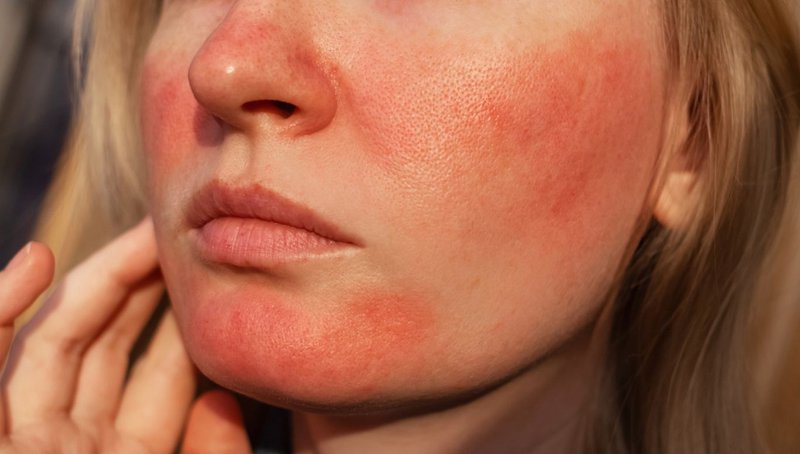
Traditional rinse-off peels stay active from application until rinsed off. That window is where the risk lives. Sensitive skin reaches its tolerance threshold faster than resilient skin does. Timing a traditional peel precisely is harder, and getting it wrong shows up quickly. Redness, stinging, and post-inflammatory irritation are all more likely on sensitive skin than on skin with a stronger barrier.
Frequency compounds the problem further. Traditional peels work in concentrated, infrequent sessions. Sensitive skin often needs more recovery time between them. In practice, that gap means less consistent exfoliation overall, which works directly against the results the treatment was meant to deliver. Consistency is what drives visible improvement in skin renewal, and infrequent high-intensity sessions make consistency harder to maintain.
A Formula Built Around Sensitive Skin
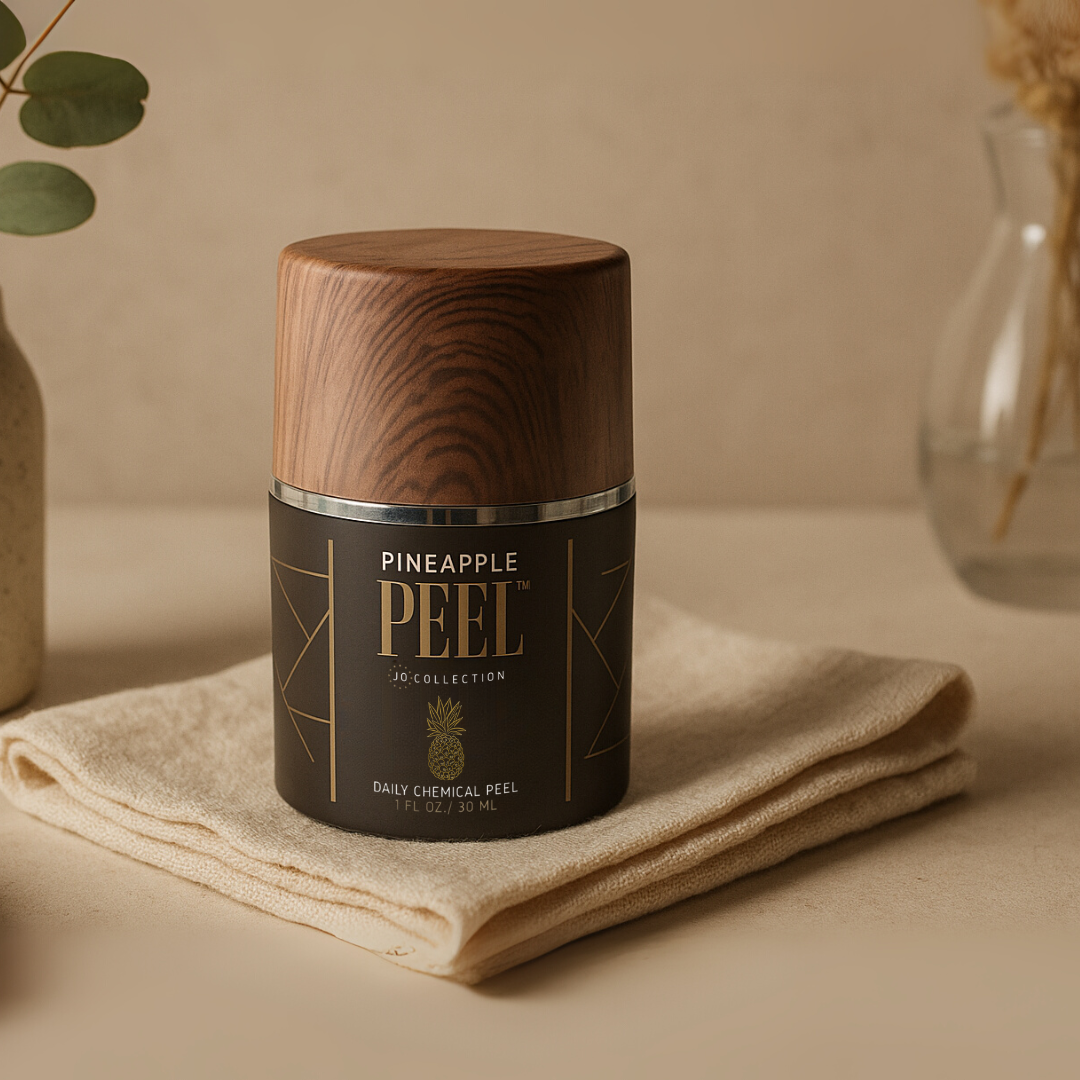
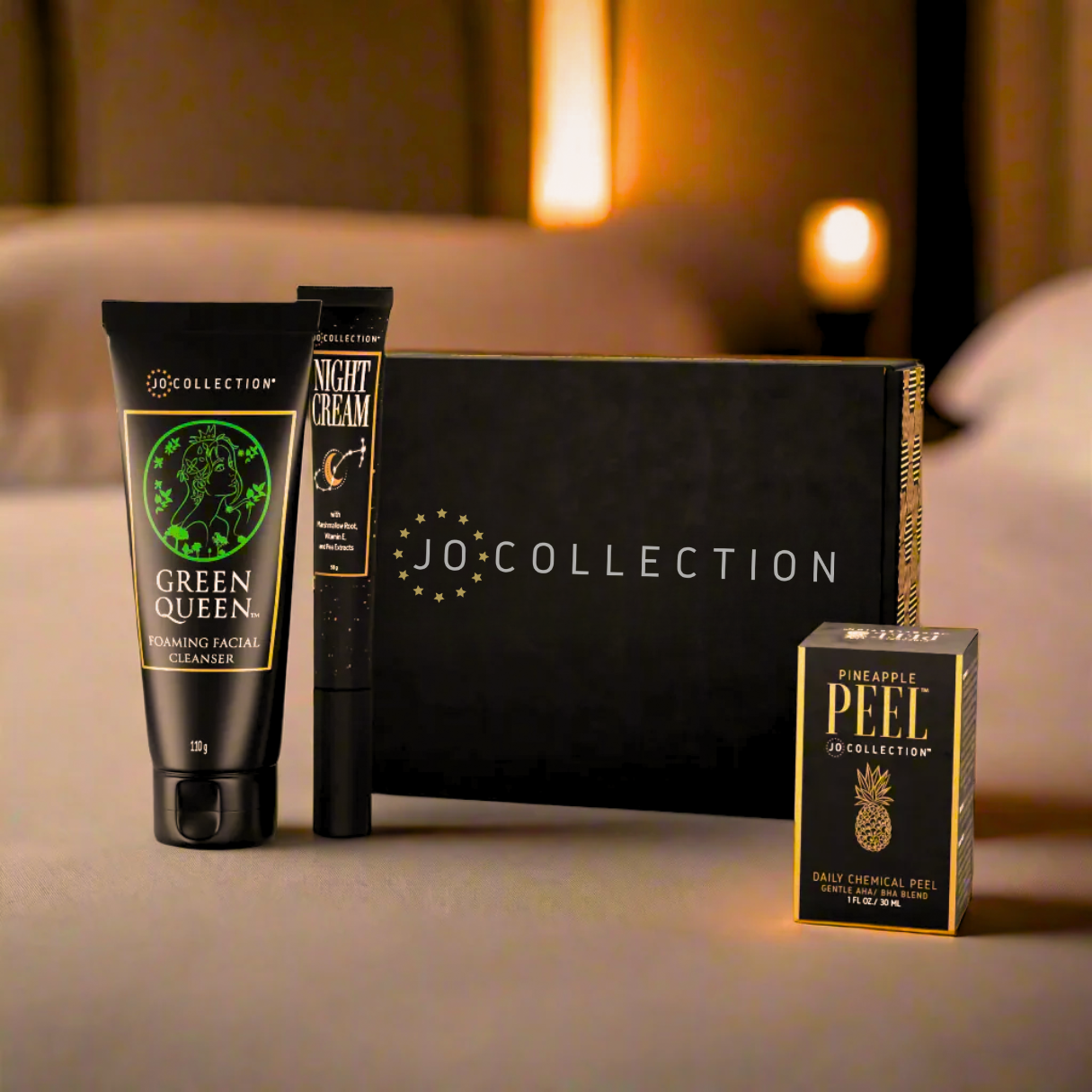
The Jo Collection Pineapple Peel removes the timing variable entirely. Its formula is self-neutralizing: the acids stop working once they have completed their job. No rinsing and no timing window required. As a result, the Pineapple Peel delivers controlled nightly exfoliation without asking sensitive skin to manage the risks that traditional peels carry.
Lactic acid plays a key role in making this formula work for sensitive skin specifically. Research published in PMC confirms that lactic acid penetrates the skin more slowly than glycolic acid, making it gentler and better suited to a wider range of skin types. Pairing it with glycolic acid, which drives deeper surface cell turnover, and salicylic acid, a beta-hydroxy acid (BHA) that clears congestion inside the pore, creates a three-acid formula that addresses texture, tone, and congestion in a single nightly application.
What Each Acid Contributes to the Formula
Glycolic acid is an alpha-hydroxy acid (AHA) derived from sugarcane. Its molecular size is the smallest in the AHA family, giving it a penetration advantage over other surface acids. It breaks down the bonds holding dead cells together and accelerates cell turnover at the surface. Over consistent use, it drives the brightening and smoothing results that make AHAs the most researched exfoliating acids in dermatology.
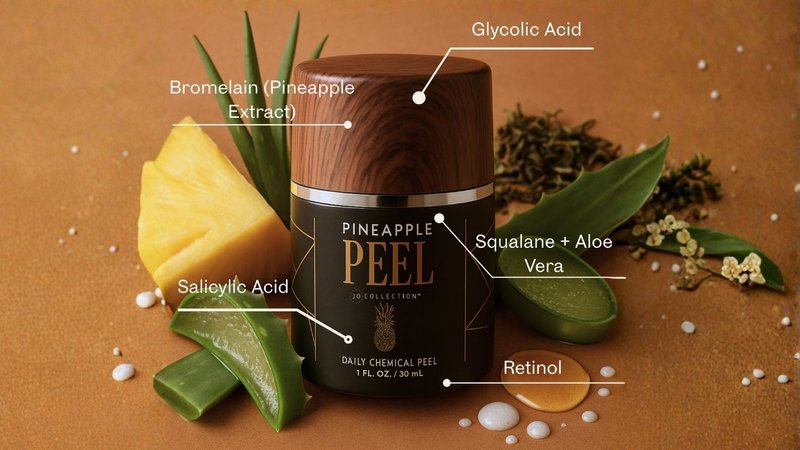
Lactic acid, also an AHA, takes a gentler approach. It exfoliates the surface while simultaneously pulling moisture into the skin, which is especially valuable for sensitive or drier skin types that tend to react to stronger actives. That hydrating action helps maintain barrier comfort during the exfoliation process rather than leaving skin feeling stripped after use.
Salicylic acid, the BHA in the formula, is oil-soluble. That property allows it to enter the pore directly and clear the congestion that surface acids cannot reach. For skin prone to clogged pores or post-breakout marks, salicylic acid addresses the source rather than just the surface. Together, all three acids cover what single-acid products typically address only partially, and the self-neutralizing mechanism keeps the formula within a safe range every night.
What Consistent Nightly Use Builds Over 28 Days
Gentle daily exfoliation produces cumulative results, not dramatic overnight ones. Each nightly application clears accumulated dead cells and gives the skin's natural 28-day renewal cycle the conditions it needs to run efficiently. Texture improves progressively. Tone evens out. For sensitive skin, one of the most noticeable early changes is a reduction in the surface reactivity that comes from product buildup on unexfoliated skin. When the surface stays consistently clear, products absorb better and the skin responds more calmly to everything applied over it.
In a 28-day in-home consumer study (n=48), 96% of participants saw healthier-looking skin by day 28. The Pineapple Peel met or exceeded database averages for comparable leave-on exfoliators on key measures including gentle exfoliation, non-stripping formula, and lasting hydration.
Peels do not have to be dramatic to work. For sensitive skin, the formula that removes the risk is the one worth committing to. Give the Pineapple Peel a full 28 days. The reputation is considerably scarier than the experience.