




Every night, most women wash their faces and apply a moisturizer, then wonder the next morning why their skin does not look noticeably different from the day before. The issue is rarely the products. More often, it is the timing and sequence of what gets applied. A consistent nighttime skincare routine does more than deliver ingredients to the skin surface. It works with a biological repair window that opens every night and closes every morning, whether you use it or not.
What Your Skin Does Between Midnight and Morning
Skin repair does not happen evenly throughout the day. Research published in PubMed confirms that sleep plays a direct role in immune function and collagen production, with sleep deprivation visibly disrupting skin barrier integrity over time. During deep sleep, growth hormone releases and triggers tissue repair across the body, including in the skin. Cell turnover accelerates. Blood flow to the dermal layers increases, delivering oxygen and nutrients to the repair processes running underneath. Collagen synthesis rises. The skin works to neutralize oxidative stress accumulated from ultraviolet (UV) radiation and environmental exposure throughout the day.

At the same time, transepidermal water loss, the rate at which moisture evaporates through the skin, increases during sleep. The skin opens for repair and renewal, but it loses hydration more readily in that state. A good nighttime skincare routine accounts for both: supporting repair while sealing moisture against that overnight loss.
Further research from PubMed on circadian rhythms and skin cell regeneration confirms that the body's internal clock orchestrates cell division, migration, and repair during sleep. In other words, the overnight window is not passive. Your skin uses it actively, and what you apply before bed either supports that work or gets in its way.
Why Product Order Determines What You Actually Get
A nighttime skincare routine is not just about which products you use. It is about whether the sequence allows each one to do its job. A cleanser removes the pollution, sunscreen residue, excess sebum, and daily buildup that collect on skin throughout the day. An exfoliator then clears the dead skin cell layer that a cleanser alone cannot address. A moisturizer seals hydration into freshly cleared, exfoliation-prepared skin rather than sitting on a clogged surface.
Skip the exfoliation step, and the moisturizer ends up hydrating the dead cell layer rather than the skin beneath it. That is not a product failure. It is a sequencing gap, and it sits at the center of why many well-intentioned nighttime routines consistently underperform.

The Nighttime Skincare Routine Built Around That Biology
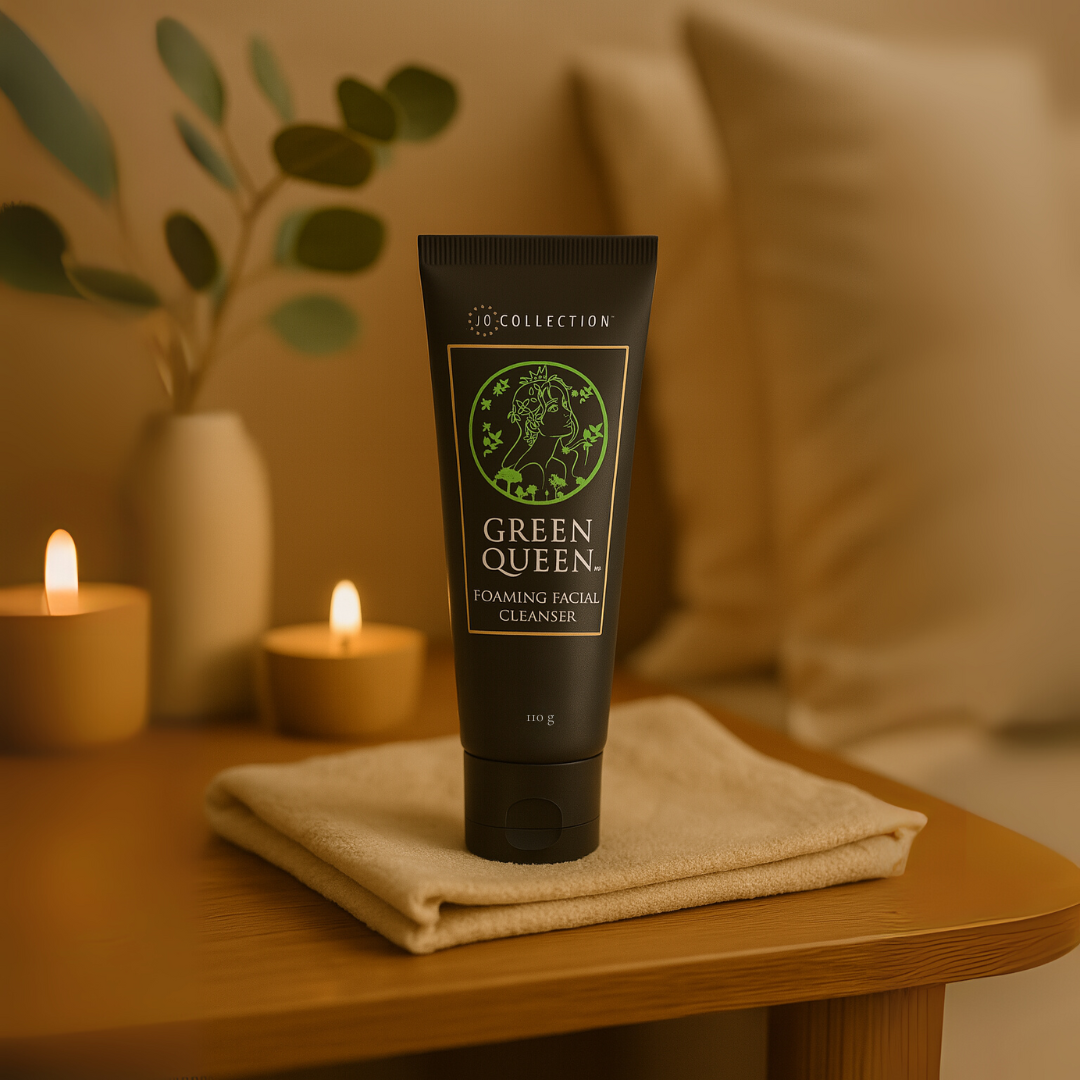
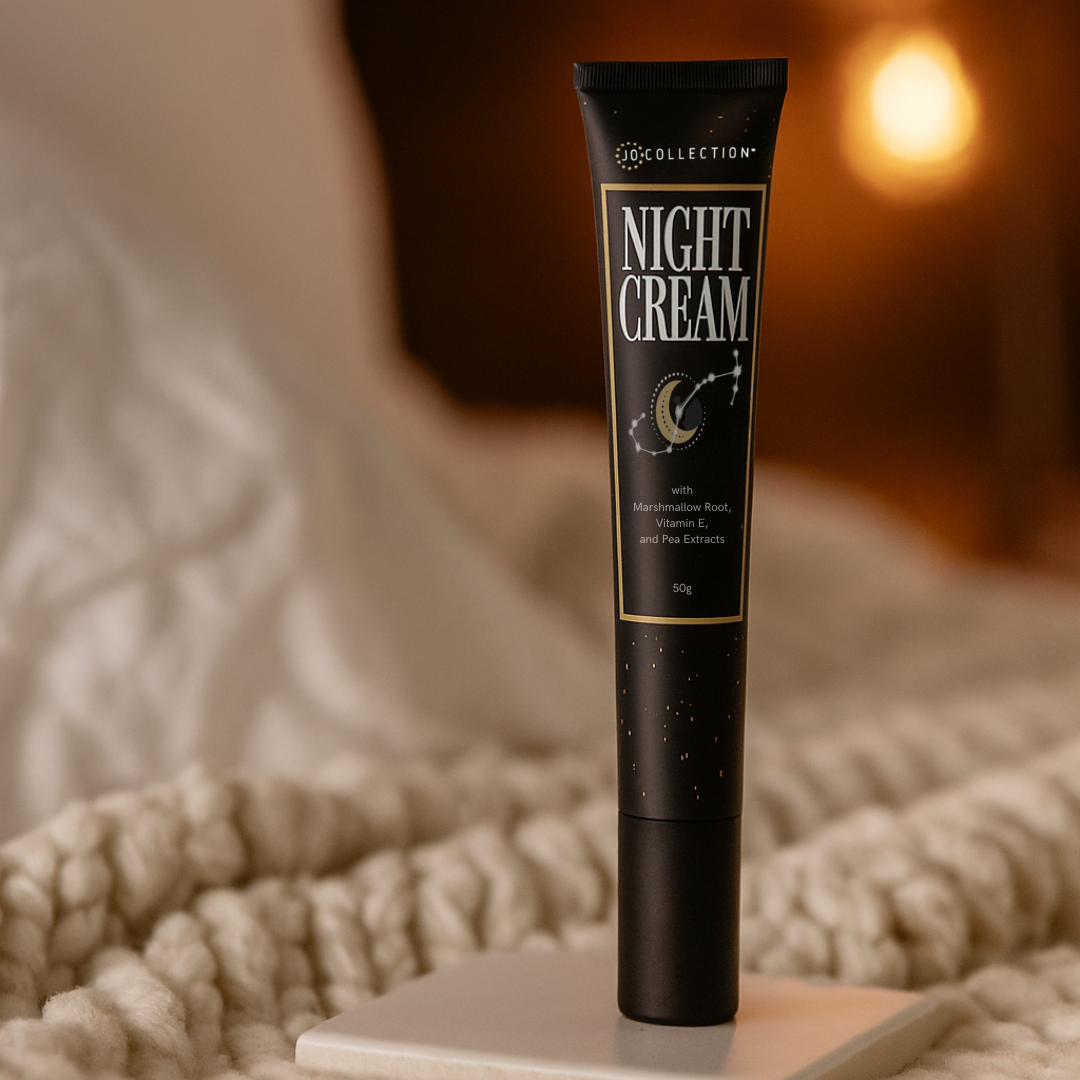
The Jo Collection Essentials Kit structures each step around the overnight repair window. Step one, the Jo Collection Green Queen Foaming Facial Cleanser, removes daily buildup using amino acid-based, pH-balanced surfactants that clean without stripping the barrier. Step two, the Jo Collection Pineapple Peel, applies a self-neutralizing blend of glycolic acid, lactic acid, and salicylic acid that clears the dead cell surface layer and supports the skin's natural 28-day renewal cycle. The acids stop working once they have done their job, so no rinsing and no timing management required. Step three, the Jo Collection Hydrating Night Cream, seals moisture into freshly exfoliated skin and supports barrier recovery through the night.

The full routine takes under five minutes. That is intentional. Leah Ward, the brand's founder, built it for working schedules because a routine that does not fit into real life does not get used.
Daytime Defends. Nighttime Skincare Rebuilds.
Daytime skincare is largely protective. You defend against UV exposure, pollution, and oxidative stress. Nighttime skincare, by contrast, is restorative. The work done between cleansing and waking compounds with every consistent night of use. Texture smooths progressively over full renewal cycles. Tone evens out. Products perform at the level they promised because the surface they work on stays renewed and clear.
In a 28-day in-home consumer study (n=48), 96% of participants saw healthier-looking skin by day 28. The Pineapple Peel met or exceeded database averages for comparable leave-on exfoliators on gentle exfoliation and lasting hydration.
Your skin runs its repair cycle every night regardless of what you put on it. The only question is whether your routine works with that biology or leaves it unsupported. Start with the Pineapple Peel, build the three-step routine around it, and use it every night. After 28 days, your skin will show you what consistent overnight support actually looks like.